

Starting Violin Lessons for Kids in Natomas
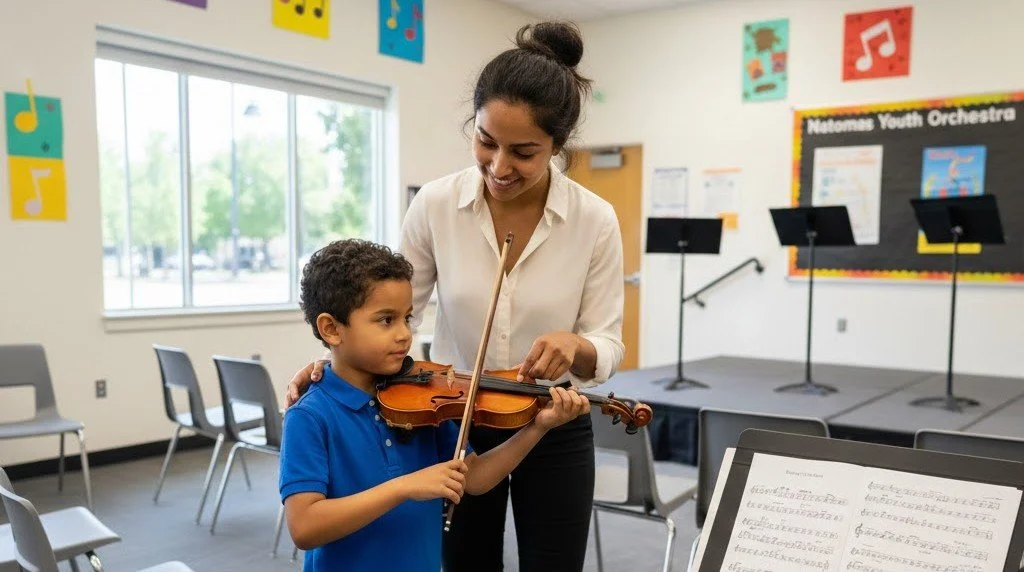
Check Physical Readiness
Children develop motor skills at different rates. Most students begin violin around age five. Little hands need coordination to hold the bow.
The chin must rest comfortably on the instrument. Wait a year if sitting still feels too hard. Lessons require twenty minutes of steady attention.
Finger strength matters for pressing the strings. A child needs strong fingers to produce clear notes. Weak fingers will cause a buzzing sound.
Observe the child during other activities. Fine motor tasks show readiness for music lessons. Drawing or building blocks indicate good hand control.
Select the Right Size
Violins come in fractional sizes for growing children. A full size violin causes neck pain for young students. The left arm must reach the scroll easily.
Visit a local music shop in Sacramento to measure. The staff will recommend a quarter or half size. Do not buy a larger violin to save money.
A bulky violin ruins playing posture. The student will drop the instrument frequently. A small violin feels easier to control.
Rent an instrument while the child grows. Kids outgrow violins every few years. Renting saves money over buying multiple sizes.
Gather Essential Accessories
You need specific items to start playing. Buy a comfortable shoulder rest. This prevents the violin from slipping down.
Get a block of rosin for the bow. The bow hair needs rosin to grip the strings. A sturdy case protects the wood from accidental bumps.
Buy a soft cloth for cleaning the instrument. Rosin dust builds up on the wood. Wipe the violin down after every single use.
Purchase a sturdy music stand for home practice. A stand keeps sheet music at eye level. Proper height prevents neck strain during practice.
Build Consistent Habits
Consistent practice beats long practice sessions. Aim for ten minutes of playing every day. Muscle memory builds well over time.
Make daily practice a normal household habit. Encourage the student to push through early squeaks. The sound improves quickly with regular effort.
Set a specific time for practice each day. Before dinner works well for many families. A routine removes the need to argue about practice.
Praise the effort instead of the result. Beginners make many mistakes early on. Positive feedback keeps the student motivated to try again.
Understand the Violin Parts
A student must learn the instrument parts. The scroll sits at the top of the neck. The tuning pegs adjust the string pitch.
The bridge holds the strings above the body. It transfers sound into the wood. Be careful around the fragile bridge.
The bow contains horsehair tightened by a screw. Never touch the bow hair with bare fingers. Oil from skin ruins the grip on the strings.
Teach the child to handle the violin carefully. The wood cracks under heavy pressure. Always store the instrument safely inside the case.
Maintain the Instrument
Violins require regular care to sound good. Temperature changes affect the wood and strings. Keep the instrument away from direct sunlight.
Do not leave the violin inside a hot car. Heat melts the glue holding the wood together. Cold air makes the instrument go out of tune.
Strings break from normal wear and tear. Keep an extra set of strings at home. A teacher will help you change a broken string.
Loosen the bow hair after every practice session. Tight hair warps the wooden stick over time. A warped bow makes playing difficult.
Listen to Music Together
Listening builds a strong musical ear. Play violin recordings in the car or at home. Exposure helps the child understand good tone.
Find recordings of famous classical pieces. Listen to folk music featuring the fiddle. Different styles keep the child interested in playing.
Talk about the music you hear together. Ask the child to identify fast or slow tempos. Ask them to point out loud or soft parts.
Attend live concerts in Sacramento when possible. Seeing real musicians inspires young students. Many local orchestras offer free family concerts.
Prepare for the First Lesson
The first lesson focuses on basic rules. The teacher will explain proper bow holding techniques. The student will learn to stand correctly.
Bring all accessories to the first meeting. The teacher will adjust the shoulder rest to fit. They will apply the first coat of rosin.
Expect the child to feel tired afterward. Learning a new posture takes physical effort. Give them a healthy snack and a rest.
Do not expect songs on day one. Plucking strings comes before using the bow. Patience ensures a solid foundation for future lessons.
Read Music and Play by Ear
Violinists learn two ways to make music. Reading sheet music teaches notes and rhythms. Playing by ear trains the brain to recognize pitch.
Good teachers include both methods in lessons. Sheet music allows students to join an orchestra. Ear training helps them correct mistakes quickly.
Practice identifying notes on the staff. Use flashcards to speed up note recognition. Quick reading makes learning new songs easier.
Singing pitches out loud helps too. A student must hear the note internally first. Singing improves the ability to play in tune.
Handle Practice Frustrations
Frustration happens to every new musician. Fingers hurt and arms get tired. The bow will bounce on the strings unexpectedly.
Take a short break if the child gets upset. Have them put the violin down safely. A drink of water resets the mind.
Break difficult songs into small sections. Practice one measure at a time. Slow down the tempo until the notes sound clear.
Remind the child progress takes months. Nobody plays perfectly right away. Small daily improvements add up to big results.
The Value of Performance
Playing for an audience builds real confidence. It gives the child a clear goal to reach. Start by playing for family members at home.
Move to small recitals a few months later. Healing Music Seeds hosts events for our students. Performing helps children manage nerves in public.
Record videos of practice sessions. Children love seeing their own progress over time. A video shows them their improvement clearly.
Celebrate every small milestone achieved. Finishing a new book deserves a special treat. Recognition makes the hard work feel worthwhile.
Find Affordable Options in Natomas
Private violin lessons in Natomas cost real money. Instrument rentals add another monthly fee for families. Healing Music Seeds removes these financial barriers for you.
We offer low cost group classes for local children. We provide quality instruments on loan to our students. Apply for our scholarship program at https://www.healingmusicseeds.org/programs.
Our classes meet at local community centers. Parents save time driving across Sacramento. Local classes make attendance easy for busy families.
Group learning keeps children engaged. They learn from watching other kids play. A shared experience makes music lessons fun.
Support Local Music Education
Music connects people across neighborhoods in California. Students make new friends in our group classes. They work as a team to play simple songs.
We believe every child deserves to learn music. We rely on community support to operate. Your help makes these programs possible.
Your contribution helps us reach more eager students. Donate to make a financial donation. We need community support to keep our programs running.